
This blog cuts through the noise and shows where AI actually delivers in manufacturing. From procurement and maintenance to quality, planning, and energy use, it breaks down how intelligence improves day-to-day operations, not just presentations. The focus stays clear: better cost control, fewer disruptions, consistent quality, and sharper decision-making across the entire value chain. It also calls out an important truth. AI doesn’t fix weak processes or poor discipline. It only works when the fundamentals are in place. If you’re running or advising a manufacturing business, this piece helps you separate real impact from hype and understand where to start, what to fix, and how to scale it right.
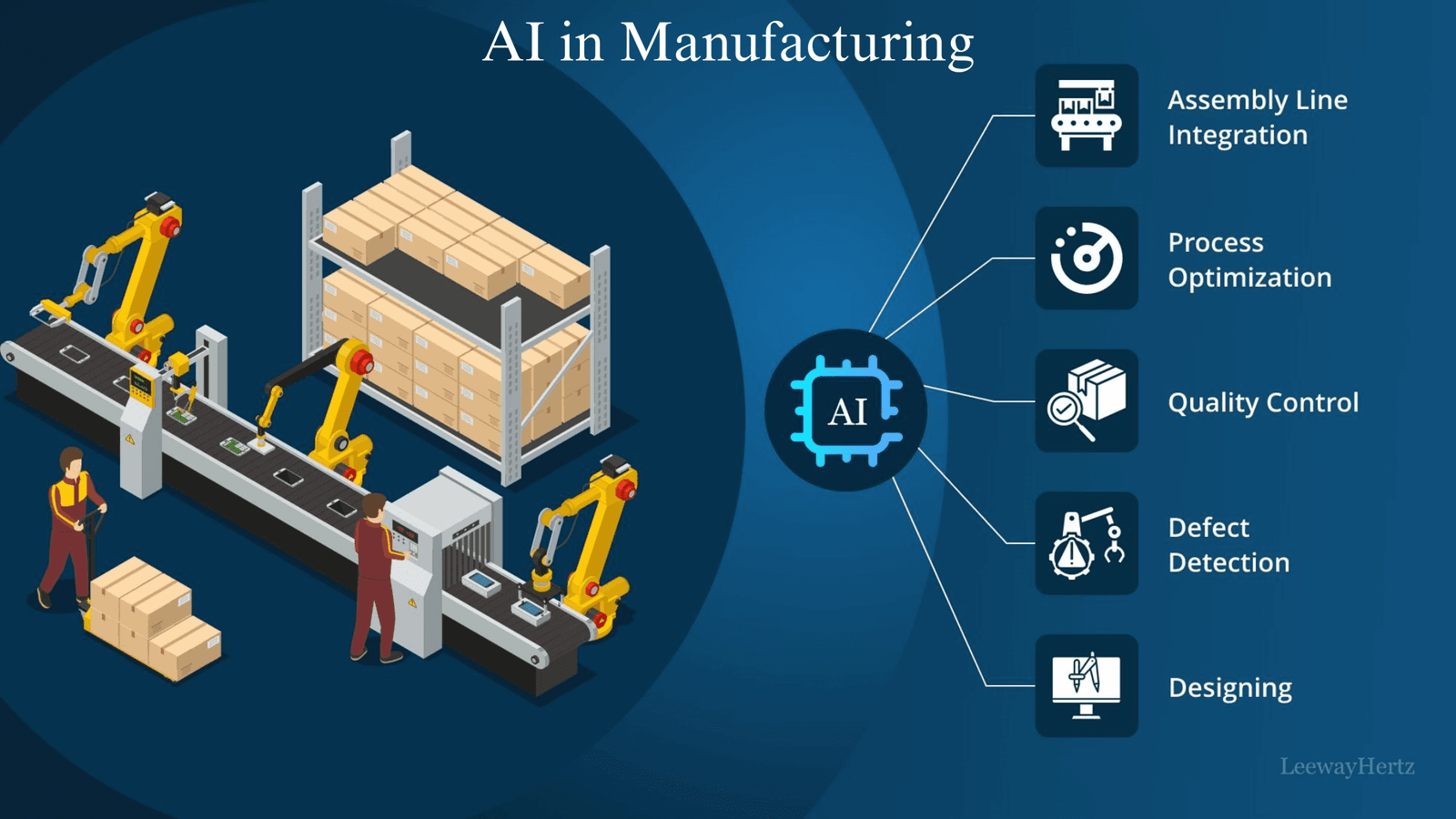
AI is everywhere in conversations.
But in manufacturing, conversations don't improve margins. Systems do.
Across industries — whether apparel, automotive, engineering, chemicals, FMCG, or electronics — the structure of a factory is remarkably similar. You procure raw material. You convert it through multiple stages. You inspect quality. You manage people and machines. You plan production. You ship. You collect revenue.
If AI is going to matter, it must strengthen this entire chain. Not one isolated function. Not one pilot project created merely for presentation slides. The real value emerges when intelligence flows seamlessly across the factory floor.
Here's what that looks like in practice.
SMARTER PROCUREMENT DECISIONS
Raw material represents the largest cost component in most manufacturing operations.
Price volatility. Supplier inconsistency. Delayed shipments. These variables don't just create headaches — they directly erode profitability. AI-powered procurement analytics cut through the noise by analyzing historical purchase data, market trends, supplier performance metrics, and demand forecasts to recommend genuinely smarter buying decisions.
Instead of reacting to price spikes, manufacturers can anticipate trends. Instead of discovering quality issues mid-production, data-driven supplier scoring eliminates risk at the source.
The benefit is immediate: ✓ Superior cost control ✓ Dramatically reduced raw material waste ✓ Enhanced supplier reliability and partnership quality
When procurement improves, downstream stability increases exponentially.
PREDICTIVE MAINTENANCE THAT PREVENTS PRODUCTION LOSS
Unplanned downtime remains one of the most expensive — and most preventable — problems in manufacturing.
AI-driven predictive maintenance systems continuously monitor vibration patterns, temperature fluctuations, energy consumption, and equipment load characteristics. When anomalies begin to appear, intelligent alerts trigger before breakdown occurs — not after.
Instead of scrambling for emergency repairs while production lines sit idle, maintenance becomes scheduled, controlled, and strategic.
The impact transforms operations:
✓ Drastically reduced downtime
✓ Lower overall maintenance costs
✓ Extended machine lifespan
✓ Stable, predictable production planning
Factories evolve from reactive firefighting to structured, intelligent control.
PROCESS OPTIMIZATION ON THE SHOP FLOOR
Every production line harbors hidden inefficiencies — idle time, line imbalances, suboptimal machine settings, micro-delays that compound relentlessly over shifts.
AI systems analyze real-time production data, operator performance patterns, machine output metrics, and cycle times with precision impossible for human observation alone. They identify bottlenecks and recommend optimized settings based on actual performance data.
This applies universally across: → Assembly lines → Continuous process plants → Batch production environments → Fabrication units
When decisions shift from assumption-driven to data-backed, output stabilizes. Quality improves. Waste decreases.
Small efficiency gains per shift compound into significant annual financial improvement.
QUALITY CONTROL THAT IS CONSISTENT AND MEASURABLE
Traditional inspection methods rely heavily on manual evaluation. Human judgment varies. Fatigue affects accuracy. Subjectivity creeps in.
AI-powered vision systems detect defects with unwavering consistency. Advanced data analytics identify recurring defect patterns, linking them precisely to specific machines, shifts, operators, or process settings.
Instead of merely rejecting faulty products at the final stage, manufacturers identify and eliminate root causes earlier in the production cycle.
The result speaks for itself: ✓ Lower rejection rates ✓ Reduced rework and scrap ✓ Improved customer satisfaction scores ✓ Stronger compliance records and audit results
Quality transforms from reactive correction to predictable prevention.
ENERGY AND RESOURCE OPTIMIZATION
Energy. Water. Fuel. Compressed air. These aren't minor line items — they're major cost drivers in modern manufacturing.
AI-based monitoring platforms analyze consumption patterns across equipment and processes with granular precision. They detect inefficiencies that humans miss: steam leaks, excessive idle energy consumption, suboptimal machine settings that waste resources hour after hour.
As regulatory frameworks tighten globally and sustainability becomes non-negotiable, accurate emissions tracking moves from "nice to have" to absolutely critical. Data-driven energy optimization simultaneously supports cost reduction and sustainability goals.
Operational efficiency and environmental responsibility begin to align perfectly.
PRODUCTION PLANNING THAT REDUCES CHAOS
Production planning accuracy is one of the most underestimated challenges in manufacturing.
Order changes arrive without warning. Material deliveries get delayed. Capacity limitations shift. Labor availability fluctuates. The result? Constant uncertainty and daily crisis management.
AI forecasting models integrate historical demand data, capacity constraints, supplier lead times, and delivery timelines to generate realistic, achievable production schedules — not aspirational fantasies.
Planning shifts from daily firefighting to structured, confident execution.
Improved on-time delivery strengthens client trust and secures long-term contracts.
REAL-TIME FINANCIAL VISIBILITY
Costing errors and hidden inefficiencies often go completely unnoticed until profit margins mysteriously shrink.
AI systems bridge the gap between production data and financial metrics. They track deviations between planned and actual costs in real-time. They highlight abnormal scrap rates immediately. They quantify productivity gaps with precision.
Management no longer relies solely on monthly reports that describe problems that happened weeks ago. They see operational performance reflected financially in near real-time.
Clarity improves decision speed. Decision speed improves competitiveness.
WORKFORCE PRODUCTIVITY AND SKILL INSIGHTS
Manufacturing remains fundamentally people-driven, despite increasing automation.
AI-driven analytics evaluate productivity trends, identify training gaps, and optimize workload distribution. Instead of subjective performance reviews based on personal impressions, discussions become grounded in objective data.
Workforce planning becomes more structured and strategic. Training investments become precisely targeted where they deliver maximum impact.
Human capability improves alongside machine intelligence — not in competition with it.
SUPPLY CHAIN INTELLIGENCE
Manufacturing excellence doesn't end at the factory gate.
AI tools continuously monitor shipment timelines, logistics patterns, and inventory levels across distributed warehouses. They anticipate delays before they cascade. They suggest alternative routing or intelligent stock allocation.
Supply chain visibility reduces costly surprises. Reduced surprises protect hard-earned reputation.
WHAT AI CANNOT DO — AND WHY THAT MATTERS
AI does not replace leadership. It does not compensate for unclear processes. It does not fix inconsistent data entry or sloppy execution.
Technology amplifies discipline. It does not create it.
Manufacturers that achieve genuine success with AI first establish these fundamentals:
✓ Clear, measurable KPIs that everyone understands and owns ✓ Clean, reliable data systems that people trust and maintain ✓ Process standardization that eliminates chaos and variation ✓ Accountability at every level — from shop floor to executive suite
Only when these foundations exist does intelligence deliver measurable, sustainable returns.
THE STRATEGIC SHIFT
Manufacturing is entering a decisive phase where efficiency, predictability, and transparency increasingly define competitive advantage. Customers expect faster delivery than ever. Regulators demand comprehensive compliance. Profit margins leave virtually no room for operational error.
AI isn't about replacing people or adding unnecessary complexity. It's about systematically reducing uncertainty.
From procurement to dispatch. From machine health monitoring to margin analysis. Intelligence embedded thoughtfully across operations strengthens control, improves visibility, and enables better decisions.
The factories that will lead the next decade won't be the ones that speak most eloquently about AI.
They'll be the ones that quietly, systematically use it to improve fundamental operational metrics — cost, quality, delivery performance, and sustainability.
Visit - madasky.com
Email - info@madasky.com